Table of Contents
ToggleIntroduction
What are the Benefits of Creatine and Why do so many athletes rely on it? Creatine is a naturally occurring substance that accumulates in our muscles to develop strength. It is mainly synthesized from amino acids, and when necessary, it supplies quick energy to the muscles for high-intensity exercise or for a power burst. Though our body produces them naturally, we can take them from foods and also from supplementary sources.
Nowadays, it is in demand not only among professionals and regular visitors of sports gyms but also among fitness enthusiasts. Due to the efficiency of this substance in strengthening muscles, increasing endurance, and accelerating muscle reconstruction processes, many take it every day to increase their performance almost overnight.
What is Creatine?
Creatine is a natural compound that the body produces on its own. It is naturally manufactured within our body, specifically in the liver, kidneys, and pancreas. These organs create it from amino acids and send it to the muscles through the bloodstream, where it is used for energy storage. Even though the body produces it, many people take it as a supplement to achieve additional performance benefits.
It boosts ATP in our body, which allows us to lift heavier and perform our workouts with higher intensity during exercise.
Creatine vs Whey Protein – Which One Should You Choose?
While creatine is excellent for strength, power, and performance, many fitness enthusiasts often wonder how it compares to whey protein. If you’re confused about which supplement fits your goals better, you can check out our detailed comparison guide here:
👉 Creatine vs Whey Protein – The Ultimate Guide to Choose the Best Supplement
What are the Benefits of Creatine?

1. Increases Muscle Strength
Especially effective is creatine because it increases the production of ATP – a complex chemical serving as a major energy source in the human body during high-intensity, short-duration activities. The more ATP one has, the more power they can exert, thus helping to lift weights that are very heavy, sprint, or do explosive movements.
Due to this, it is extremely suitable for sprinters, throwers, weightlifters, and other strength-dependent athletes. With regular intake, there is an obvious improvement in strength performance and training output.
2. Faster Muscle Growth
It accelerates muscle growth by stimulating protein synthesis and helping increase the volume of training. Being able to do more repetitions and sets adds to better hypertrophy. Combined with resistance exercises, it clearly aids in the development of lean body mass.
3. Enhances High-Intensity Performance
Creatine works very effectively for endurance in high-intensity activities. It enhances your endurance levels for repeated sprints, jumping, throws, and actions requiring rapid muscle power. In the gym, it will help you perform more reps and more sets and also sustain your muscle power for a more prolonged period.
4. Better Recovery
This helps ensure better recovery because muscle damage and inflammation after intense exercise are minimal, so the energy in your muscles is replenished more quickly, and thus this minimizes fatigue, enabling one to recover more quickly between sessions. Take it regularly, and your overall recovery capacity and efficiency of training go up a notch. Basically, it is superior for recovery.
5. Improves Brain Function
It improves brain activity by increasing the levels of ATP within the brain. This can enhance memory, improve concentration, and quicken the mental processing speed. So, it’s not only athletes who will find this beneficial but also students, gamers, and professionals since it reduces mental fatigue and helps one stay focused.
6. Helps With Hydration & Cell Volumization
Creatine draws water into the muscle cells, enhancing hydration and ‘cell volumization,’ which makes the muscles look fuller and keeps them healthy. This increase in water improves the efficiency at which the muscle cells work and helps increase muscle strength. In the end, this amply helps in improving strength, endurance, and overall performance during training.
7. Supports Long-Term Health
It is not only useful for performance but also for long-term health. It has been found to contribute to the maintenance of bone strength, to support blood sugar regulation, and even to offer neuroprotection to the nervous system. So, if you are not an athlete, it could be an important health-supportive supplement, especially for the elderly.
Best time to take Creatine
Timing your creatine supplement isn’t very hard, but taking it for optimal absorption will make it more efficient. The best and easiest tip for optimal creatine supplement absorption would be:
1. Take It After Your Workout (and You Can Mix It with Your Pre-Workout):
This is hands-down the most important time to be taking your creatine supplement. It needs to be done immediately after your workout. As your muscle cells are highly receptive to nutrient uptake at this specific juncture, it increases your chances of your muscle cells taking in creatine. You can use it with your pre-workout by mixing it in.
2. Take It with Carbs:
To optimize your creatine supplement’s absorption, you should consume it with a carbohydrate source – either juices, fruits, or a carbohydrate shake. It can even be with a source of protein. The result will be an insulin spike that acts as a key for your muscle cells to unlock and absorb your creatine.
3. Use a Dose of 3-5 Grams on a Daily Basis:
The most crucial thing about taking creatine is that it should be done on a consistent basis. You will have to make it a point to consume 3-5 grams on a daily basis. Don’t worry about the timing. Take it even on your rest days.
4. Don’t Forget To Drink Water (3-4 Liters per Day!):
As it works with water, it is very essential to drink plenty of water. It would be great if you could drink 3-4 liters of water daily. Drinking water will not only make your muscles full and healthy but will also make you hydrated so that you get maximum benefits from taking it.
Safety & Side Effects
Generally speaking, creatine is completely safe and 100% supported by research for healthy individuals. A lot of people worry that it might affect the kidneys, but studies consistently show this idea is totally false. The only crucial step is to ensure you drink adequate water every day, about 3–4 liters, to maintain proper hydration. In the beginning, you might notice a slight weight gain due to minor water retention, but this is normal and not harmful. When taken regularly at the correct dose, it is considered safe for long-term use.
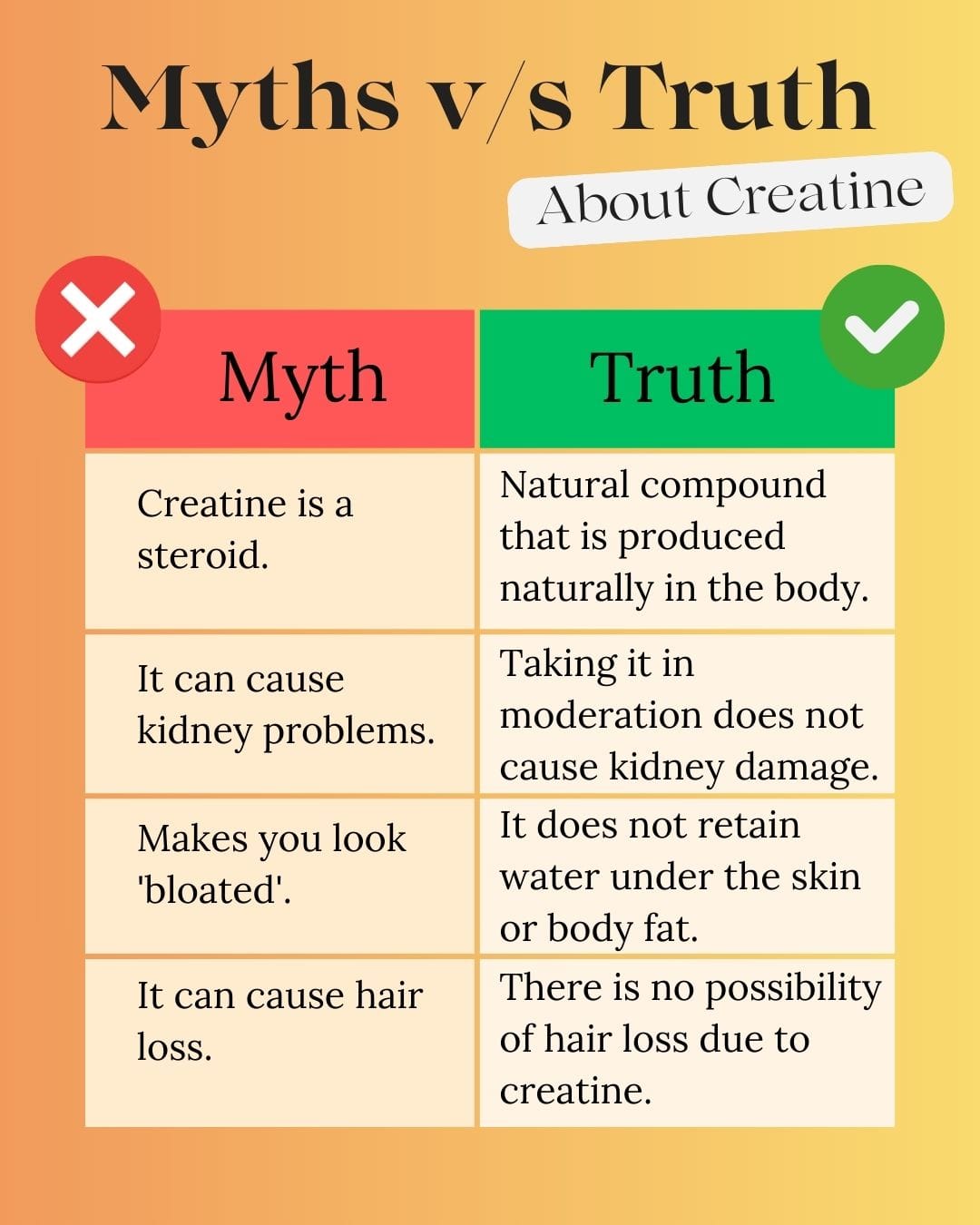
Myths and Truth about of Creatine
1. ❌ Myth – Creatine is a steroid.
✔️ Truth – It is a natural compound that is produced naturally in the body and
is also found in foods like fish and meat.
2. ❌ Myth – Taking it can cause kidney problems.
✔️ Truth – As with whey protein, studies have shown that for healthy people, taking it in moderation does not cause kidney damage. However, those who have kidney disease should consult a doctor.
3. ❌ Myth – It causes water retention in the body and makes you look ‘bloated’.
✔️ Truth – It primarily draws water into muscle cells, which makes muscles look fuller and improves performance. It does not retain water under the skin or body fat, which can make you look ‘bloated’.
4. ❌ Myth – Taking creatine causes hair loss.
✔️ Truth – There is no possibility of hair loss due to creatine because it is the world’s most research-based supplement.
Does Creatine Causes Hair Loss?
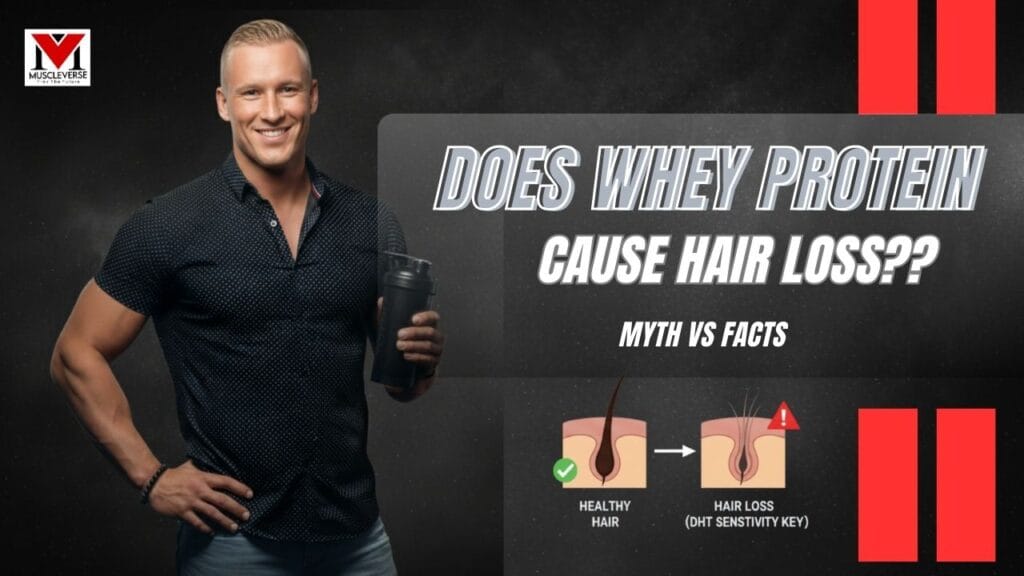
Does creatine cause hair loss? — This is a common and widely circulated misconception. Scientific research shows that, to date, there is simply no direct evidence linking it to hair loss.
Some people claim it increases the DHT hormone, but this assertion lacks a strong scientific basis. It primarily works to boost strength, performance, and muscle growth, and it does not have a direct negative effect on hair. For individuals who already have a genetic predisposition to hair loss, shedding may naturally occur – but this is not caused by the creatine. Creatine, taken at a healthy dose, remains safe.
If you’re ready to improve strength, recovery, and performance, choosing a clean and proven creatine supplement can make a big difference.
👉 Explore a top-rated creatine supplement – Nutrabay Pure Creatine Monohydrate
Disclosure: This post contains Amazon affiliate links. I may earn a commission at no extra cost to you.
Conclusion
Creatine is currently recognized as one of the safest and most effective supplements available. It is incredibly effective at boosting strength, muscle growth, brain function, and overall performance. Crucially, it benefits not just competitive athletes but also regular fitness enthusiasts and non-athletes alike, as it raises energy levels, improves recovery, and supports long-term health. With consistent and proper use, creatine has the power to elevate both your physical and mental performance to a whole new level.
FAQs
1. What are the benefits of taking creatine?
Creatine offers multiple benefits, including increased muscle strength, faster muscle growth, enhanced high-intensity performance, and improved recovery. It helps boost ATP production, allowing muscles to generate more power during intense workouts. In addition to physical benefits, it also supports brain function by improving memory, focus, and mental processing speed. It further aids in muscle hydration, cell volumization, and long-term health, such as bone strength and nervous system support.
2. Is creatine okay to take daily?
Yes, it is safe to take daily when used consistently at the recommended dose of 3–5 grams per day. Your blog emphasizes that regular daily intake – even on rest days – is important for maximum effectiveness. When combined with adequate water intake (3–4 liters per day), creatine is considered safe for long-term use in healthy individuals.
3. What are the downsides of creatine?
Creatine has very few downsides when taken correctly. In the initial phase, some people may notice slight weight gain due to water retention inside the muscle cells, which is normal and not harmful. The blog clearly states that it does not damage kidneys in healthy individuals, as long as proper hydration is maintained.
4. Does creatine affect testosterone?
There is no strong scientific evidence that creatine negatively affects hormones like testosterone. It primarily works by increasing ATP production to enhance strength, performance, and muscle growth. It does not interfere with hormonal balance or cause testosterone-related issues.
5. Does creatine cause hair loss?
No, creatine does not cause hair loss. Your blog explains that this is a common myth with no direct scientific evidence. While some claims suggest a link to increased DHT levels, these claims lack strong research support. Any hair loss experienced by individuals is more likely due to genetic factors rather than creatine supplementation.