


Table of Contents
ToggleIntroduction
After going to the gym continuously for one year, I gradually started understanding diet and supplements. My knowledge about the benefits of supplements from the perspective of bodybuilding and fitness also began to grow. That’s when I started exploring more about supplements. In the world of supplements, creatine and whey protein powder both play a very important role.
When considering supplements, the debate of creatine vs whey protein often arises. Though both creatine powder and whey protein are the best in their own places. But whenever the thought of buying supplements or taking muscle building to the next level comes to mind, a debate often starts between creatine and whey protein, like “How to drink whey protein?”, “How to take creatine?”, “When to drink whey protein?”, etc. However, comparing creatine and whey protein isn’t really fair because they both are great in their own way.
Still, when budget and personal goals have come into consideration, it’s important to understand how each works. That’s why, after six years of experience, scientific research, and personal use, I’m sharing my knowledge with you all. After reading this blog, I hope you’ll have no doubts left about creatine and whey protein.
What is whey protein?
Breaking down the whey protein
Whey protein is a type of protein derived from milk, which is produced from a liquid byproduct during the cheese-making process. Compared to other sources of protein, it contains fewer calories and is easily digestible, which is why it holds a special demand in the world of bodybuilding and fitness.
Where whey comes from and how it’s processed
A high-quality protein made from cow’s milk is called whey protein. When cheese is made from milk, a special enzyme (such as rennet) is added to the milk so that the milk is divided into two parts. One part solidifies into cheese, and the other part remains in a liquid state, which is called ‘whey.’ By filtering this liquid whey, the bacteria, fats, lactose, and other unnecessary elements are removed. The purified whey liquid is then dried and converted into powder, which we use as ‘whey protein.’
Different types of whey protein are available in the market
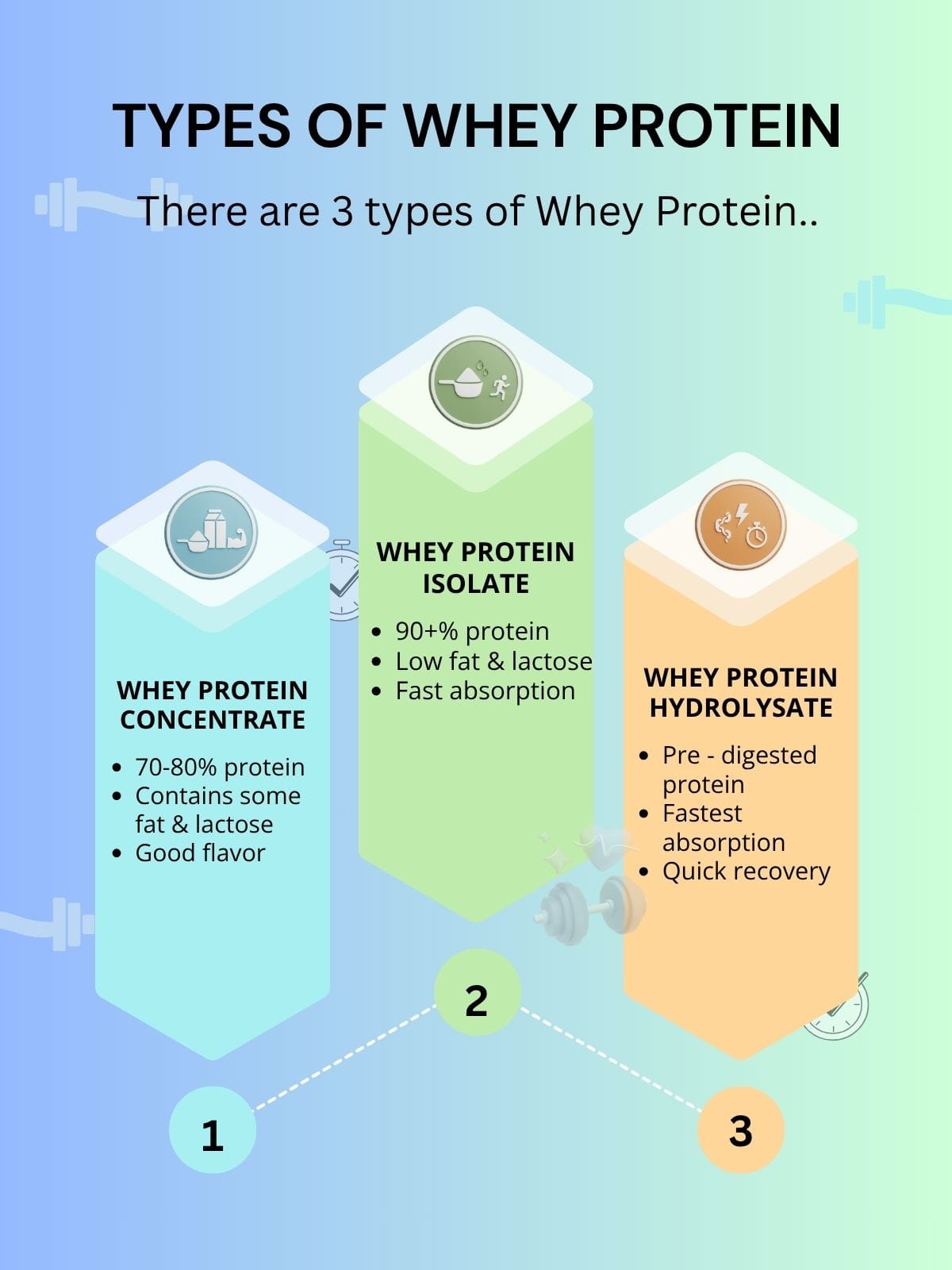
There are 3 types of whey protein-
- Whey Protein Concentrate- It contains about 70–80% protein and has a higher amount of lactose and fat. It is less processed.
- Whey Protein Isolate- The amount of protein is more than 90% protein. Because of high purification, the amount of lactose and fat is very low in it. And this makes it especially more beneficial for the people who have lactose intolerance.
- Whey Protein Hydrolysate- The molecules of this whey protein are broken down into small peptides, which is why the body absorbs it quickly. And as a result, muscle recovery becomes faster.
Why your body actually needs protein for recovery
Protein plays a very important role in maintaining body fitness. During a workout, tears occur within our body’s muscles. By consuming protein, the amino acids (like leucine) within it increase muscle protein synthesis, which helps to regenerate the torn muscles and aids in muscle growth. Furthermore, it is used to reduce muscle fatigue and soreness and in the production of hormones, enzymes, and blood cells. Check out these blogs to learns more about whey protein..
5 Proven Benefits of MuscleBlaze Whey Protein-You should know
Best Time to Take Whey Protein for Maximum Results (Morning, Before or After Workout?)
Additionally, if you’re interested in finding the right product, check out our review on the
What is creatine?
Breaking down the creatine
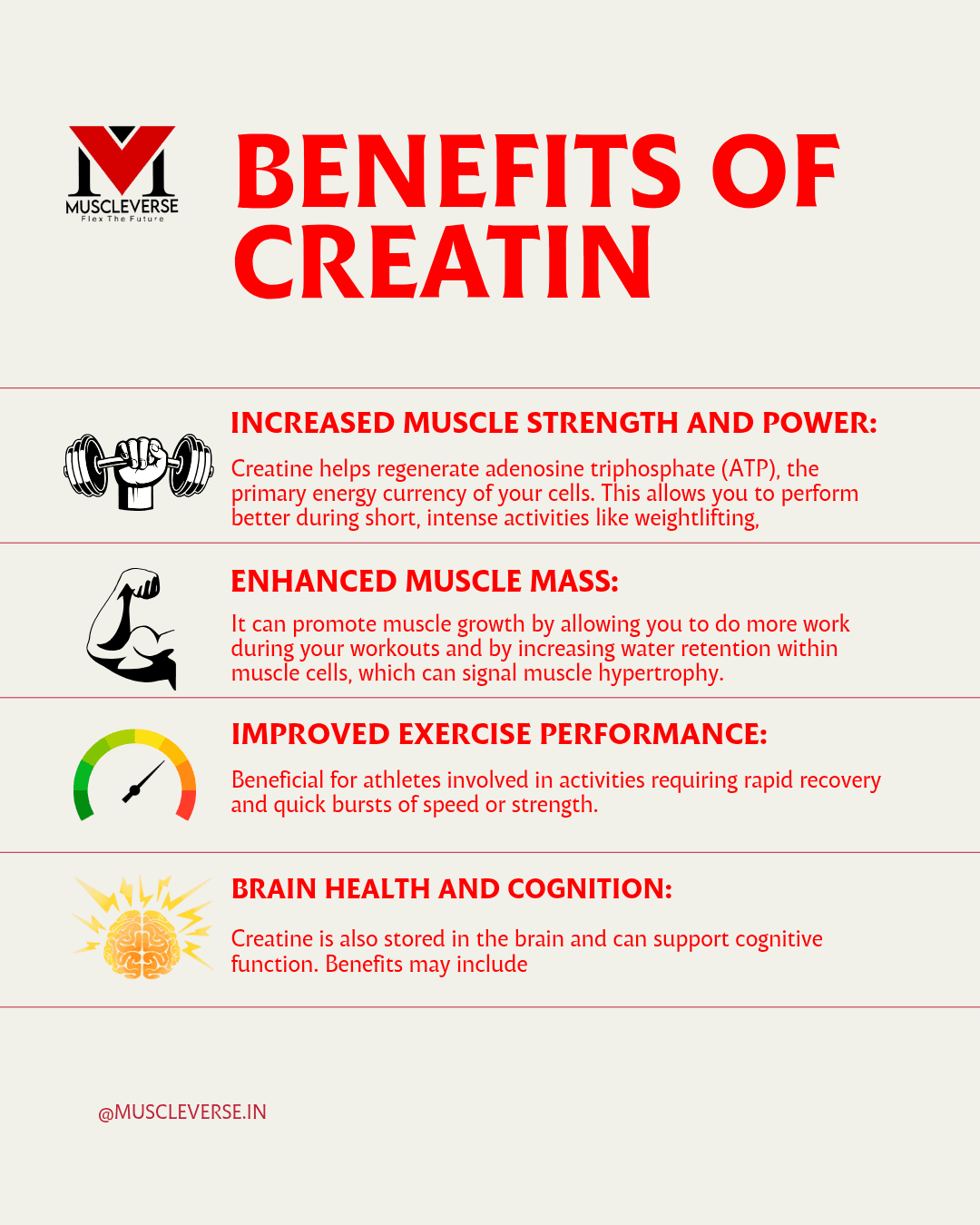
Creatine is a natural compound that is generally found in muscles and brain cells. It is created from three types of amino acids, which are L-arginine, glycine, and L-methionine. In the body, creatine gradually converts into creatinine. This creatinine is emitted through the kidneys from the body. Creatine has an important role in managing the body’s energy, and it is able to fulfill the demand for high energy in the muscles and brain.
What does creatine do in your muscle cells?
The primary function of creatine is to supply energy to the body’s muscles by producing ATP (Adenosine Triphosphate). When the body performs high-intensity exercise, ATP is rapidly used up. At that time, creatine helps to rebuild ATP, which allows the muscles to remain strong for a longer period. This is why many athletes and bodybuilders take creatine supplements to improve their performance.
In addition, creatine supports muscle growth and protein synthesis by increasing the muscle cell volume (by increasing water retention capacity). It also enhances the activity of satellite cells, thereby increasing the potential for muscle repair and growth.
Natural source vs supplement forms
Natural creatine is mainly found in animal-based foods, such as red meat, fish (salmon, tuna, herring), chicken, and dairy products. From these sources, the body receives the necessary amino acids to produce creatine, which is then used as energy in the muscles. However, the level of creatine found in these animal-based foods is generally not very high.
On the other hand, artificially produced creatine becomes the main supplement for vegetarians. It rapidly increases the creatine levels in the muscles, quickly boosts energy, and enhances performance. Consequently, creatine is very popular among athletes and bodybuilders.
The science behind the energy production process
The main source of energy production in the body’s muscle cells is ATP (Adenosine Triphosphate). When muscles contract or perform work, ATP is rapidly used up. Creatine phosphate helps to quickly regenerate ATP. The high-energy phosphate group from creatine phosphate is transferred to ADP (Adenosine Diphosphate), which works to form new ATP. This process is managed by an enzyme called Creatine Kinase. This entire process is very fast and is completed within a few seconds. As a result, an extra supply of energy is provided, which is supportive of high-intensity exercise.
How do they work differently?
Timing of each supplement's work in your body
Creatine
- It is good to take creatine within 1 to 2 hours of exercise; some research suggests that taking creatine within 1 hour after a workout helps increase lean mass and strength. Conversely, other studies have shown that taking it before exercise regularly provides similar benefits. However, the body can absorb creatine better when taken with carbohydrates.
- Generally, 3-5 grams of creatine should be taken every day. Many people, however, take 10 grams of creatine for the first 14 days when starting. This is known as the loading phase.
- Additionally, creatine can also be taken in the morning after waking up and at night before going to sleep.
Whey Protein
- Whey protein can be consumed within 30-60 minutes immediately after a workout. This helps the torn muscles to regenerate quickly.
- Whey protein can be taken after waking up in the morning. This increases metabolism and helps in reducing body fat.
- Whey protein can be taken after lunch.
- Whey protein can be taken 1-2 hours before going to sleep at night to prevent muscle breakdown.
How long does each supplement take to show results
Creatine
When consuming 3-5 grams of creatine regularly every day, it takes 3-4 weeks for creatine to accumulate in the muscle tissue. Within 2-4 weeks, there is an improvement in strength, performance, and faster recovery during exercise, and by the end of the month, the increase in muscle size and strength becomes noticeable. Consuming adequate water (4-5 liters) and maintaining a proper diet are important, along with creatine consumption.
Whey Protein
Generally, changes in the body’s muscles can be felt within 2-3 weeks of consuming whey protein. Taking 25-30 grams of whey protein 30 minutes after regular daily exercise gives the best results. And external changes can be noticed after 1-2 months. Muscle mass increases and body fat reduces.
Cost comparisons and self-life consideration
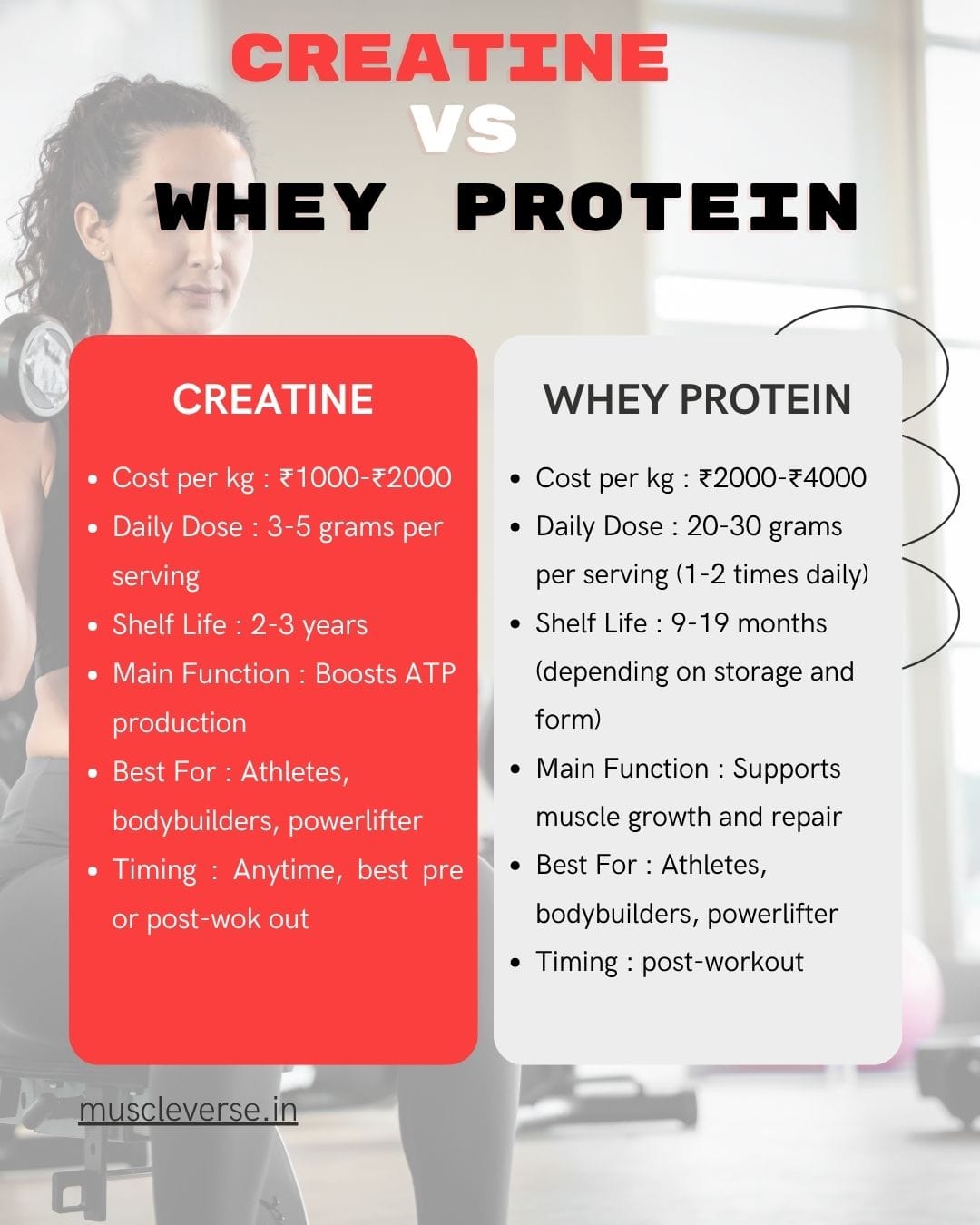
The prices of creatine and Whey Protein generally vary by brand. In reality, creatine is mostly cheaper than whey protein. On whey protein it costs around ₹2000-₹4000 per kilogram, while creatine price around ₹1000-₹2000 per kilogram. Furthermore, you need to take 20-30 grams of whey protein daily, whereas you only need 3-5 grams of creatine per day. Creatine is cheaper, has a longer shelf life (2-3 years), while whey protein is more expensive but provides more protein and remains good for about 9-19 months.
Whey protein role in muscle building

Whey protein plays an important role in muscle gain. It acts as a very fast and effective source of protein for the body, which is essential after a workout.
During training, our muscle tissues break down into very small fragments. At this time, whey protein supplies essential amino acids and leucine to help repair the breakdown in these muscle tissues and make the muscles stronger. Regular whey protein intake is very beneficial; among its benefits are increased lean muscle growth, reduced muscle soreness, and improved overall recovery time.
Creatine's role in strength
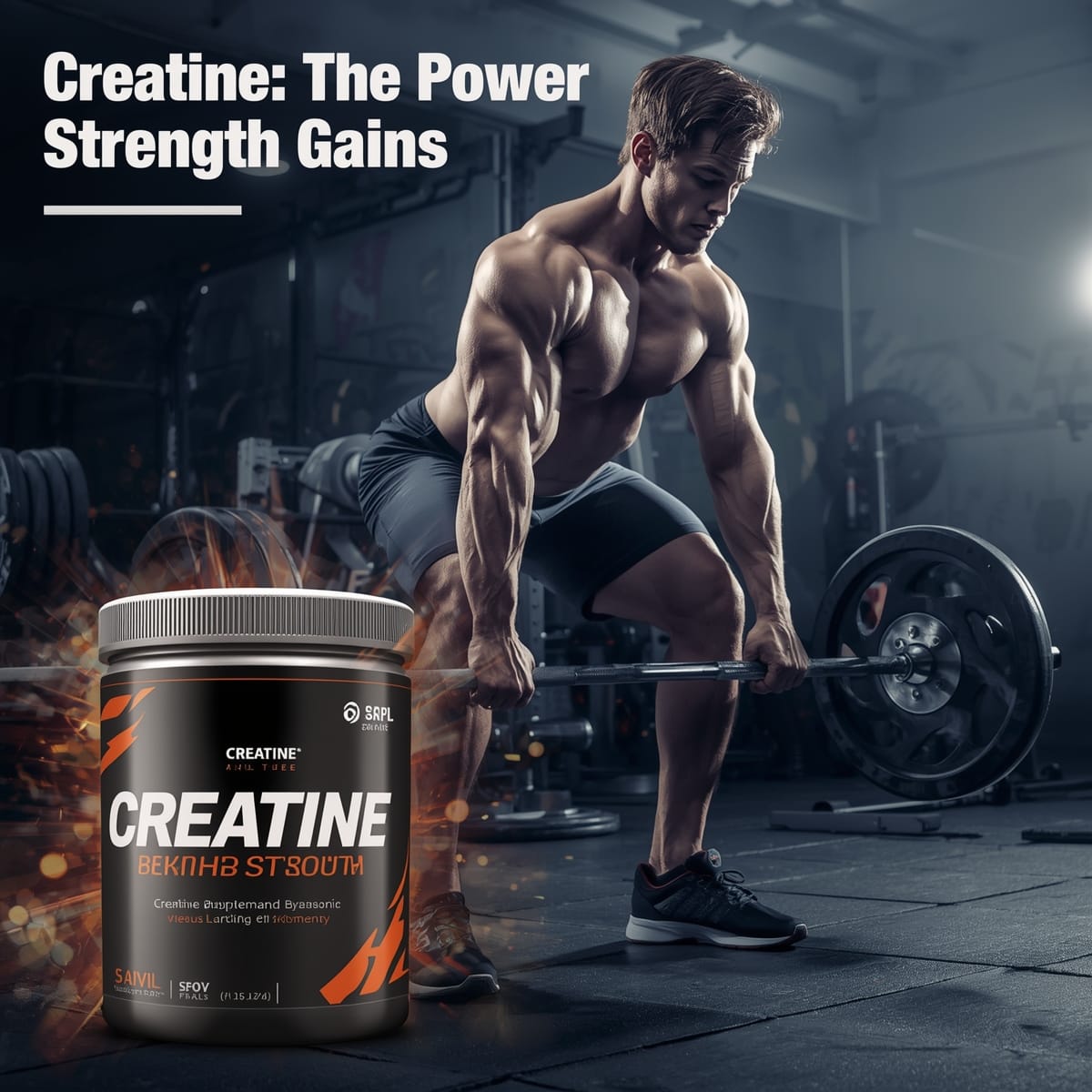
In the present age, in the fitness industry, creatine works like a ‘Brahmastra’ (a powerful, ultimate weapon) for increasing strength. It supplies extra energy to the muscles. It greatly helps in heavy lifting and in pushing one’s potential. Specifically, it works to increase strength over time.
While protein only focuses on muscle repairing, creatine does not do so exclusively. Creatine plays a very important role in helping you give your best in high-intensity training.
Which one should you actually take
Whether you take whey protein or creatine depends on your goals and objectives.
If your primary goal is muscle building or increasing muscle mass, then you should use whey protein.
And if your main objective is to increase athletic performance or boost strength, then creatine is a very important supplement for you.
Furthermore, if your goal is both, then you can use both supplements
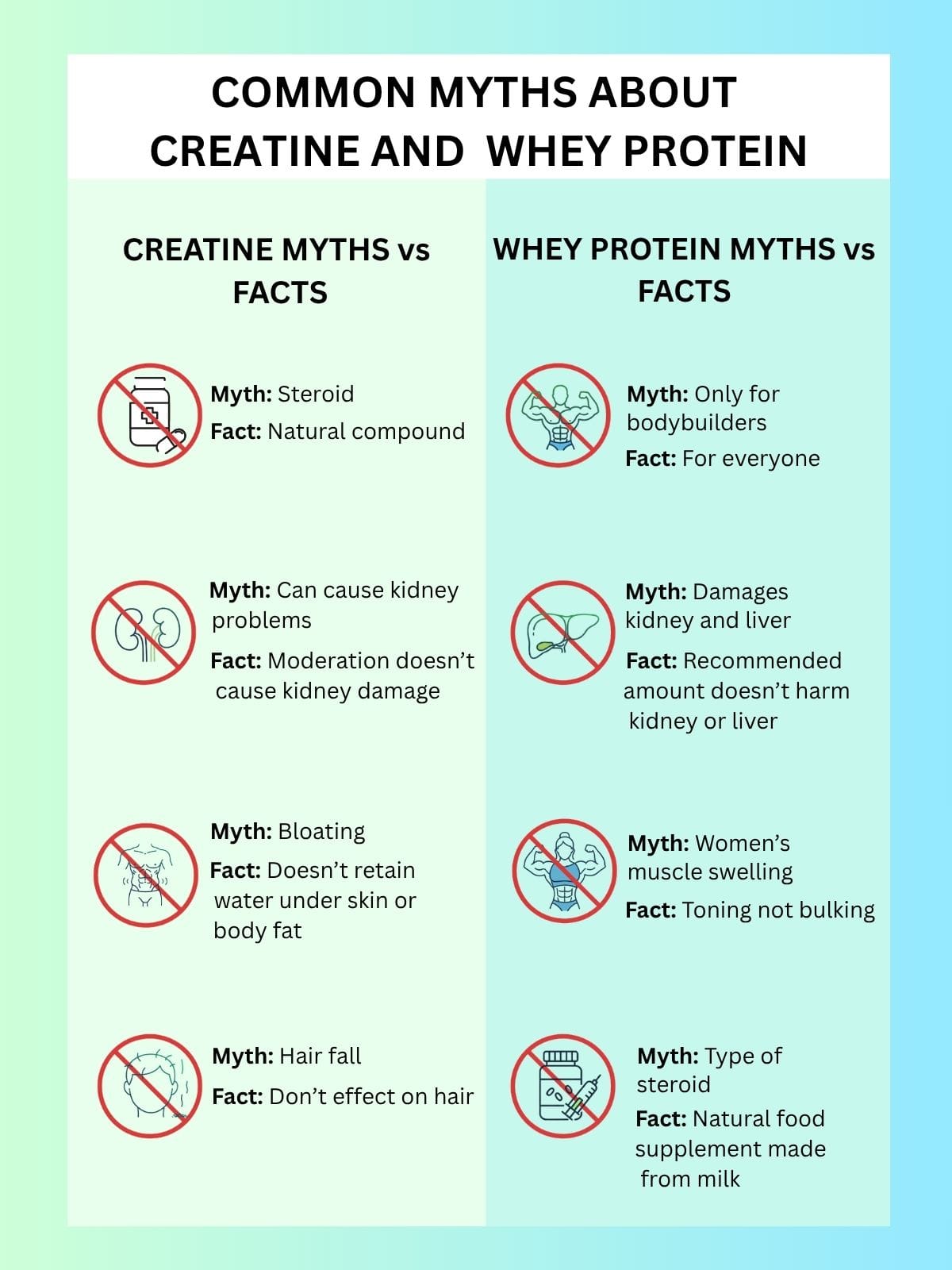
Common myths about creatine and whey protein
Myths about of Creatine
Myth – Creatine is a steroid.
Truth – Creatine is a natural compound that is produced naturally in the body and is also found in foods like fish and meat.
Myth – Taking creatine can cause kidney problems.
Truth – As with whey protein, studies have shown that for healthy people, taking creatine in moderation does not cause kidney damage. However, those who have kidney disease should consult a doctor.
Myth – Creatine causes water retention in the body and makes you look ‘bloated’.
Truth – Creatine primarily draws water into muscle cells, which makes muscles look fuller and improves performance. It does not retain water under the skin or body fat, which can make you look ‘bloated’.
Myth – Taking creatine causes hair loss.
Truth – There is no possibility of hair loss due to creatine because creatine is the world’s most researched based supplement.
Myths about Whey Protein
Myth – Whey protein isn’t just for bodybuilders.
Truth – They don’t get their protein intake from home food. Anyone who needs extra protein can take it.
Useful for athletes, students, working people, weight gainers, etc.
Myth – Whey damages kidneys & liver.
Truth – For healthy people, consuming the recommended amount of whey protein does not cause any harm to the kidneys. Only those who already have kidney problems should consult a doctor before consuming excess protein. It is important to drink plenty of water.
Myth – Women’s muscles swell when they consume whey protein.
Truth – Women have lower testosterone levels, so their bodies don’t build muscle like bodybuilders.
Myth – Whey Protein is a type of a steroid.
Truth – This is not right. Whey protein is a natural food supplement made from milk. It is a source of protein, which is necessary for the body to build and repair muscles. It has nothing to do with steroids.
Practical Decision-Making Framework
Simple questions to determine your priority supplement
- Am I consuming 0.8 grams of protein per kilogram of my body weight every day?
- Is my main goal muscle building/recovery or strength/power increase?
- Do I work out with high intensity or do I work out with moderate weight?
- What is my budget?
- Am I able to track my fitness lifestyle properly?
Ask these questions to yourself, and if the answers to these questions are positive, then you can safely use supplements with the correct knowledge. This is completely safe and helpful.
The biggest mistake most people make is choosing the wrong supplement. Selecting the right supplement is a huge deal. That is why I have brought for you some supplements of renowned and lab-tested brands for both protein and creatine…
Recommended Whey Protein and Creatine Brands
If you’re ready to take your muscle-building journey to the next level, here are some trusted whey protein and creatine brands that I personally recommend. These supplements come from quality manufacturers known for their effectiveness and value.
Disclosure: This post contains Amazon affiliate links. I may earn a commission at no extra cost to you.
FAQs
- 1. Should I priority is protein or creatine?Protein - it’s essential for muscle growth and recovery.Add creatine later for extra strength and power.
- 2. Should skinny guys take credit in our protein?Skinny guys should start with protein to build muscle mass.Add creatine once your diet and protein intake are consistent — it helps boost strength and workout performance.
- 3. Can I build muscle with creatine only?Creatine can boost strength and let you train harder, which supports muscle growth, but you still need consistent resistance training and enough protein/calories to actually build muscle—creatine alone isn’t enough.
- 4.Can I mix creatine with whey protein?Yes, you can safely mix creatine with whey protein in the same shake. It’s convenient and both work well together for muscle growth and recovery.
- 5. Is creatine safe to daily?Yes, creatine is safe to take daily for healthy adults. It is one of the most researched supplements and shows no harmful effects when used at the recommended dose of 3–5 grams per day. With proper hydration and regular use, creatine supports strength, energy, and muscle performance safely.


Informative